

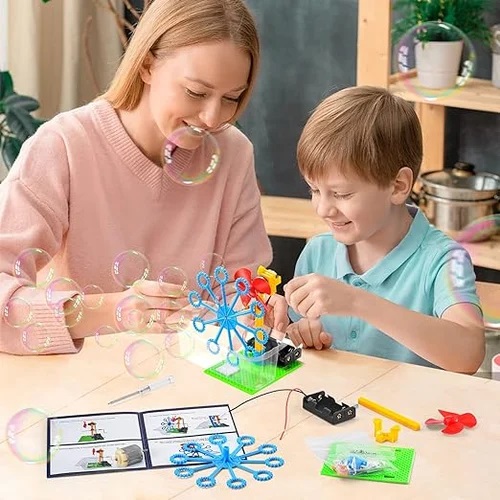
Kindergarten is a terrific time to engage pupils in STEM concepts in a fun, developmentally appropriate way. When properly equipped, robotics may be a fun and engaging learning experience for young pupils. Basic robotics projects in the classroom can foster critical thinking, creativity, and problem-solving while keeping children engaged. These projects let youngsters experiment, collaborate, and see results through hands-on play.
Choosing the Right Beginner Robotics Kits
It’s crucial to give safety, ease of use, and longevity a priority when choosing robotics kits for kindergarteners. Kits like Botley the Coding Robot, Code-a-Pillar, and Bee-Bot are made especially for young students. These robots move and react using straightforward buttons or color-coded commands rather than screens or intricate programming. They are therefore perfect for young toddlers whose cognitive and fine motor skills are still developing. These kits provide a pleasant and colorful bundle that gently introduces logical thinking, sequencing, and directions.
Practical Projects That Encourage Education
To keep kindergarteners interested, robotics projects should be imaginative and flexible. Children can, for instance, program a Bee-Bot to navigate a block maze or create a map and have the robot “visit” certain sites. They can even make themed tasks, like a treasure hunt or space voyage, or decorate their robots. Basic STEM ideas like cause and effect, spatial awareness, and patterns are reinforced by these exercises. More significantly, they show kids how their decisions and instructions have a direct impact on the robot’s actions.
Promoting Collaboration and Interaction
Since students frequently collaborate in small groups to design, construct, and test the movements of their robots, robotics projects inherently foster teamwork. Kindergarten technology activities, like basic robotics projects, provide young learners with opportunities to develop critical social-emotional skills including sharing, listening, and problem-solving. By giving students straightforward roles and encouraging them to discuss their ideas and methods, teachers can improve these experiences. As students celebrate their accomplishments and grow from their failures, these projects can also help them become more confident.
Linking Robotics to More General Learning Objectives
Numerous subjects can readily incorporate robotics. For example, in a reading exercise, students could control their robot to visit letters or words on a mat, while in a math lesson, they could use the robot to count steps or recognize shapes. Learning in the classroom is reinforced in fresh and engaging ways by these cross-curricular links. The best part is that robotics fosters lifelong STEM learning by encouraging young kids to test theories, ask questions, and learn how things work.
Conclusion
Kindergarten classes can introduce students to STEM education through simple robotics projects. Even the youngest students may start to grasp the fundamentals of engineering, programming, and problem-solving with the correct resources and exercises. In addition to making learning enjoyable, these interesting projects lay a solid basis for further scientific and technological research.