

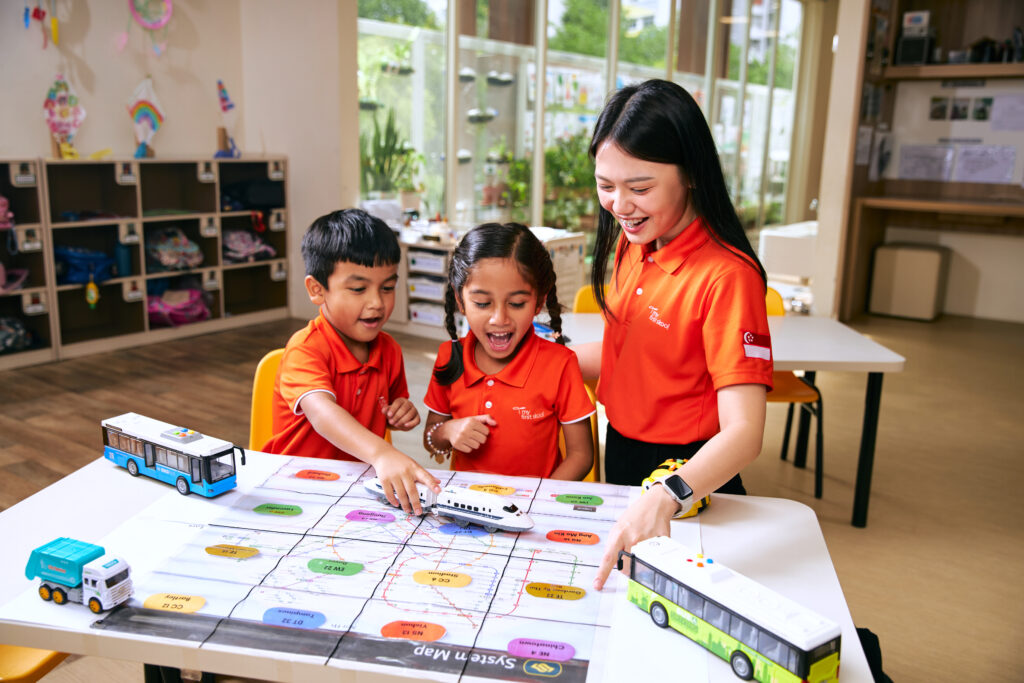
Parents across Singapore face an important choice when selecting early childhood education. A quality Singapore kindergarten programme shapes young minds during their most formative years. Understanding what children actually learn helps families make informed decisions about their child’s educational journey.
Foundation Skills That Matter Most
Singapore kindergarten programmes focus on building essential skills rather than cramming facts. Children develop language abilities through storytelling, songs, and daily conversations with teachers and peers. These early communication skills form the backbone for all future learning experiences.
Motor skills receive equal attention in quality programmes. Small muscles strengthen through drawing, cutting, and building activities. Large muscle groups develop during outdoor play, dancing, and structured movement games.
Social And Emotional Growth
Learning to interact with others ranks as a top priority in early childhood settings. Children practise sharing toys, taking turns, and working together on simple projects. These social skills prepare them for primary school environments and lifelong relationships.
Emotional regulation becomes a daily learning opportunity. Teachers guide children through managing disappointment, expressing feelings appropriately, and celebrating others’ successes. This emotional foundation supports academic achievement and personal wellbeing throughout their educational journey.
Language Development Through Play
Building Bilingual Foundations
Quality preschool programmes in Singapore typically introduce multiple languages naturally through play and routine activities. Children absorb English and their mother tongue without the pressure of formal lessons. This early exposure creates confident bilingual speakers who switch between languages effortlessly.
Vocabulary grows through themed activities, picture books, and interactive games. Teachers use everyday situations to introduce new words and concepts. Children learn language patterns through repetition and meaningful contexts rather than memorisation.
Reading Readiness Without Pressure
Pre-reading skills develop through enjoyable activities that don’t feel like work. Children identify letters in their names, recognise familiar signs, and understand that text carries meaning. Story time builds listening skills and introduces narrative structures.
Print awareness emerges as children see adults writing notes, reading instructions, and using books for information. They begin to understand that writing flows from left to right and top to bottom. These concepts prepare them for formal reading instruction without creating stress or anxiety.
Mathematical Thinking In Daily Life
Number Sense Through Exploration
Children in Singapore kindergarten encounter mathematics through cooking, sorting toys, and counting steps on the playground. They compare heights, arrange objects by size, and distribute snacks equally among friends. These experiences build intuitive number sense before formal arithmetic begins.
Pattern recognition develops through music, art, and movement activities. Children create sequences with blocks, continue rhythmic patterns, and identify repeating designs in nature. This mathematical thinking supports logical reasoning and problem-solving abilities.
Problem-Solving Skills
Real-world challenges become learning opportunities in quality programmes. Children figure out how to build stable towers, share limited materials, and organise classroom spaces. Teachers guide them through thinking processes rather than providing immediate solutions.
Critical thinking emerges as children ask questions, test theories, and draw conclusions from their experiences. They learn to approach problems systematically and consider multiple solutions. These skills transfer to academic subjects and everyday life situations.
Creative Expression And Arts
Developing Imagination
Art activities in early childhood settings encourage personal expression rather than producing identical results. Children explore different materials, experiment with colours, and create original works. This creative freedom builds confidence and artistic appreciation.
Dramatic play allows children to explore different roles, express emotions, and work through experiences. They might pretend to be doctors, teachers, or family members. These imaginative activities develop empathy, communication skills, and emotional understanding.
Music And Movement
Singing, dancing, and playing simple instruments introduce children to rhythm, melody, and cultural traditions. Music activities support language development, mathematical concepts, and physical coordination. Children learn songs in different languages, connecting with Singapore’s multicultural heritage.
Creative movement helps children express themselves physically and understand spatial relationships. They learn to move their bodies in different ways, follow directions, and coordinate actions with others. These skills support physical development and self-awareness.
Science Discovery And Wonder
Natural Curiosity
Quality programmes nurture children’s natural interest in how things work. Simple experiments with water, plants, and everyday objects introduce scientific thinking. Children learn to observe carefully, ask questions, and make predictions about outcomes.
Nature exploration connects children with their environment and builds respect for living things. They might grow plants, observe insects, or study weather patterns. These experiences develop observational skills and environmental awareness.
Hands-On Learning
Scientific concepts emerge through play and exploration rather than abstract explanations. Children discover that ice melts, seeds grow, and magnets attract certain materials. They build understanding through direct experience and guided discovery.
Technology integration happens naturally as children use simple tools and observe cause-and-effect relationships. They might use magnifying glasses, balance scales, or digital cameras to explore their world. This early exposure builds comfort with learning tools and scientific equipment.
Preparing For Primary School Success
Quality Singapore kindergarten programmes create smooth transitions to formal education. Children develop independence, follow routines, and take responsibility for their belongings. They learn to listen to instructions, complete simple tasks, and ask for help when needed.
Academic readiness emerges naturally through play-based learning rather than formal lessons. Children arrive at primary school with strong foundations in language, mathematics, and social skills. Most importantly, they maintain their love of learning and curiosity about the world around them.